



Introduction
A cat’s coat is more than just a beautiful feature. It protects the skin, regulates body temperature, and blocks environmental elements. A healthy coat is usually soft, clean, and relatively smooth, with a natural shine that reflects your cat’s overall condition. However, maintaining healthy fur requires more than occasional brushing. Nutrition, hydration, grooming habits, and general health all play important roles in keeping your cat’s coat in good condition.
Whether you have a short-haired domestic cat or a long-haired breed such as a Persian or Maine Coon, establishing a consistent care routine can make a noticeable difference. If you are wondering how to keep your cat’s coat healthy, here are nine practical tips to help your feline companion maintain soft, shiny, and well-groomed fur.
1. Brush Your Cat Regularly
Regular brushing is one of the most important parts of keeping a cat's coat healthy. It removes loose fur, dirt, and debris while reducing tangles and mats. Brushing also helps distribute natural oils across your cat’s fur, which can contribute to a smoother and healthier-looking coat. The ideal brushing frequency depends on your cat’s coat type.
Short-haired cats: Brushing once or twice a week is often sufficient to remove loose hair and maintain coat condition.
Medium-haired cats: Brush several times a week to prevent tangles and remove loose undercoat.
Long-haired cats: Daily brushing is often recommended to prevent mats, particularly around the belly, legs, chest, and behind the ears.
Choose a brush that suits your cat’s coat. A soft-bristle brush or grooming glove may work well for short-haired cats, while a suitable slicker brush or wide-tooth comb can help manage longer fur. Start with gentle, short grooming sessions, especially if your cat isn't used to being brushed. Rewarding your cat with treats and praise can help make grooming a more positive experience.

2. Feed Your Cat a Balanced, High-Quality Diet
Nutrition strongly influences your cat’s skin and coat condition. A balanced diet provides essential nutrients that support healthy skin, normal hair growth, and overall well-being. Protein is especially important because hair is made primarily of a protein called keratin. Cats need adequate dietary protein to maintain normal coat growth and body functions.
Healthy fats also contribute to skin and coat condition. Essential fatty acids, including omega-3 and omega-6, help support the skin’s natural barrier and maintain coat quality. When choosing cat food, look for a complete and balanced formula appropriate for your cat’s life stage.
Important nutritional considerations include:
- High-quality protein: Supports normal hair growth and tissue maintenance.
- Omega-3 fatty acids: Help support healthy skin and may benefit cats with certain inflammatory skin conditions.
- Omega-6 fatty acids: Contribute to skin barrier function and coat condition.
- Vitamins: Nutrients such as vitamins A and E support normal skin function.
- Minerals: Zinc and other essential minerals contribute to normal skin and hair health.
Avoid adding supplements without consulting your veterinarian. Excessive amounts of certain nutrients can be harmful, and a complete commercial cat food may already provide everything your cat needs.
3. Make Sure Your Cat Drinks Enough Water
Hydration supports your cat’s overall health, including normal skin function. Cats naturally have a relatively low thirst drive, which means some may not drink much water from a traditional bowl. This can make it helpful to introduce different ways to encourage water intake.
Consider these simple ideas:
- Provide fresh, clean water every day.
- Place multiple water bowls around your home.
- Keep water bowls away from litter boxes.
- Try a cat water fountain if your cat prefers moving water.
- Include wet food in your cat’s diet when appropriate.
Wet cat food contains more moisture than most dry food, so it can help support daily water intake. Although proper hydration is beneficial, a dull coat should not automatically be attributed to dehydration. Changes in coat condition can have several possible causes and may require veterinary attention.

4. Bathe Your Cat Only When Necessary
Most healthy cats groom themselves well. Their tongues help remove loose fur, dirt, and debris, so routine bathing is generally unnecessary. However, certain situations may require a bath. For example, your cat may have become unusually dirty, developed a substance on its fur, or need a veterinarian-recommended medicated shampoo.
If bathing is necessary, follow these guidelines:
- Use lukewarm water.
- Choose a shampoo specifically formulated for cats.
- Avoid getting water or shampoo into the eyes and ears.
- Rinse thoroughly to remove all product residue.
- Gently dry your cat with a soft towel.
Never use human shampoo or products designed for dogs unless your veterinarian confirms they are safe for your cat. Some ingredients can irritate feline skin or be toxic to cats. If your cat has sensitive skin, persistent itching, or an existing skin condition, ask your veterinarian before using any grooming products.
5. Prevent Mats and Tangles
Matted fur is common, especially in long-haired cats. Mats form when loose hair tangles and compacts, creating knots that become increasingly difficult to remove. If left untreated, severe mats may pull on the skin, cause discomfort, and trap dirt or moisture.
To prevent matting:
- Brush long-haired cats regularly.
- Pay extra attention to tangle-prone areas.
- Check the fur behind the ears and around the legs.
- Keep grooming sessions gentle and consistent.
- Use a suitable comb to check for hidden knots.
Never pull forcefully on a mat. Avoid using scissors close to the skin because cat skin is thin and can easily be cut accidentally. If the mat is tight, extensive, or close to the skin, consult a professional groomer or veterinarian for safe removal.

6. Check for Fleas, Ticks, and Skin Problems
External parasites can affect your cat’s skin and coat health. Fleas, in particular, may cause itching, excessive scratching, hair loss, and skin irritation. Some cats are also allergic to flea saliva, meaning even a small number of flea bites can trigger significant discomfort.
Make it a habit to check your cat’s skin and fur during grooming sessions. Look for:
- Small dark specks that may be flea dirt.
- Excessive scratching or licking.
- Redness and irritated skin.
- Scabs or small bumps.
- Areas of thinning fur or hair loss.
- Unusual changes in skin texture.
Use flea and tick prevention products your veterinarian recommends. Never apply a dog flea treatment to a cat, as some products containing permethrin can be highly toxic to felines. If you notice persistent itching, bald patches, or skin irritation, arrange a veterinary examination to identify the underlying cause.
7. Maintain a Clean and Comfortable Living Environment
Your cat’s environment can influence its skin and coat condition. Dust, dirt, excessive humidity, and poor hygiene may contribute to discomfort or expose your cat to irritants. Keeping your home clean can help create a more comfortable space for your feline companion.
Focus on these areas:
Wash bedding regularly: Clean your cat’s blankets, beds, and favorite resting spots to remove loose fur, dust, and accumulated dirt.
Clean grooming tools: Remove trapped hair from brushes and combs after each use.
Maintain litter box hygiene: Scoop waste regularly and clean the litter box to support a healthier living environment.
Reduce environmental irritants: Avoid strong fragrances, harsh cleaning products, and unnecessary chemicals around your cat.
Provide comfortable resting areas: Give your cat a clean, quiet place to sleep and relax.
A clean environment supports general hygiene and makes regular grooming easier.
8. Understand Seasonal Shedding
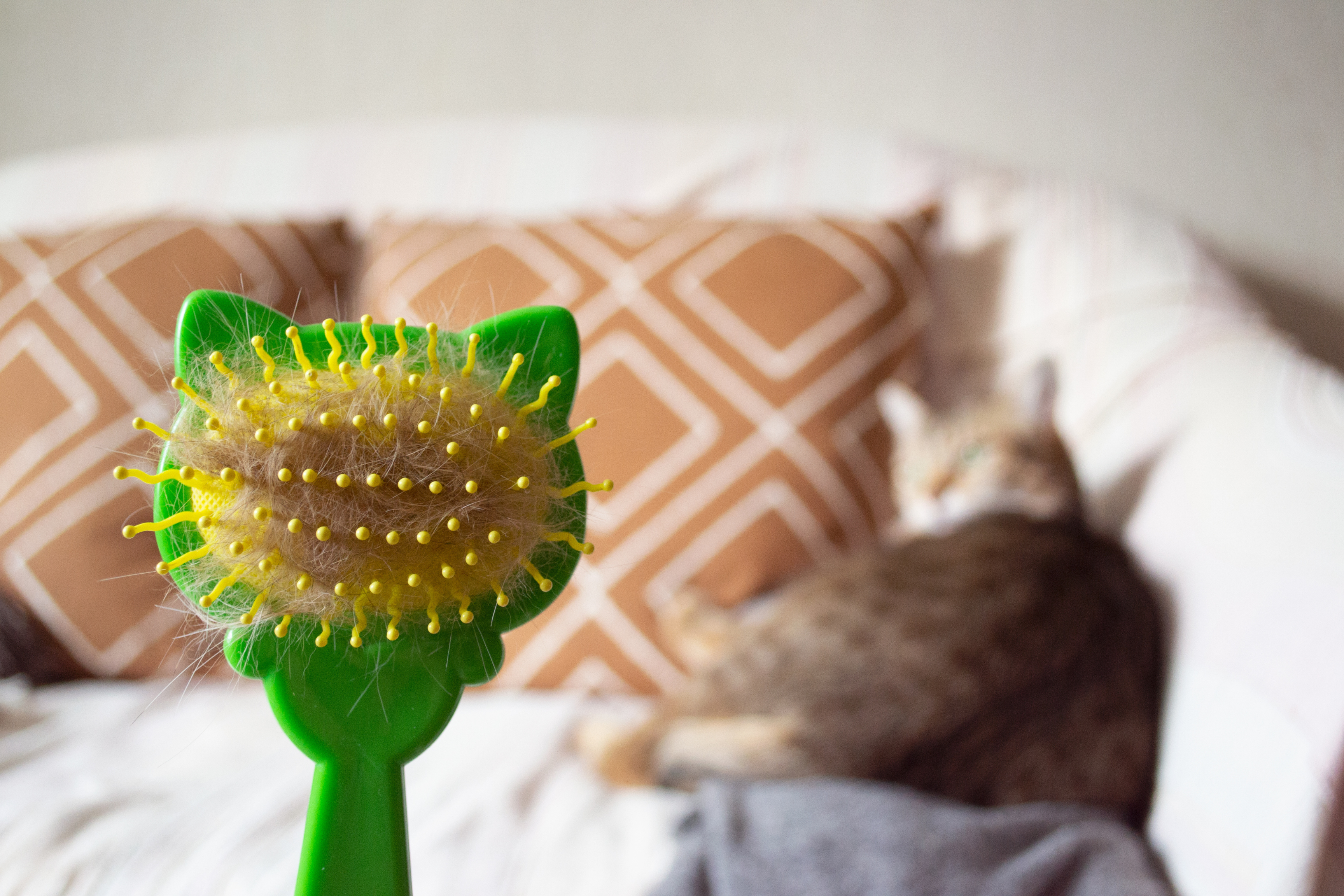
Shedding is a normal part of a cat’s hair growth cycle. Most cats lose old or loose hair throughout the year, although shedding may become more noticeable during seasonal changes. Indoor cats may shed relatively consistently because artificial lighting and stable indoor temperatures can influence their natural shedding patterns. While you cannot completely prevent normal shedding, regular grooming can help manage loose fur and reduce hair around your home.
Consider using a grooming glove or a brush designed for your cat’s coat type. Avoid excessive brushing or aggressive deshedding tools, as these can irritate the skin or damage healthy hair. If shedding is accompanied by bald patches, excessive licking, skin inflammation, or sudden changes in coat texture, consult your veterinarian.
9. Schedule Regular Veterinary Checkups
A cat’s coat can sometimes provide clues about its overall health. Changes such as excessive shedding, dull fur, greasy patches, and hair loss may indicate an underlying issue.
Possible causes include:
- Nutritional deficiencies.
- Flea infestations or other parasites.
- Allergies and skin sensitivities.
- Fungal or bacterial skin infections.
- Hormonal or metabolic conditions.
- Stress-related overgrooming.
Regular veterinary checkups help identify potential health concerns before they become more serious. Your veterinarian can assess your cat’s skin and coat, review its diet, and recommend appropriate treatment if necessary. Seek veterinary advice if your cat develops sudden hair loss, persistent itching, open sores, unusual skin changes, or stops grooming itself properly.

Signs of a Healthy Cat Coat
How can you tell whether your grooming routine is working? Although coat characteristics vary between breeds, a healthy cat’s fur generally has several recognizable qualities.
| Coat Characteristic | What to Look For |
| Texture | Soft and smooth |
| Appearance | Clean with a natural shine |
| Hair coverage | Even coverage without unexplained bald patches |
| Skin condition | No persistent redness, sores, or irritation |
| Grooming | Minimal tangling and matting |
| Shedding | Normal hair loss without excessive bald spots |
Remember that some breeds naturally have different coat textures. A healthy Rex cat, for example, may have a wavy or curly coat rather than the smooth appearance associated with other breeds.
Common Mistakes to Avoid When Caring for Your Cat’s Coat
Even well-intentioned cat owners can make grooming mistakes that affect their pets’ comfort. One common mistake is brushing too aggressively. Too much pressure can irritate the skin and make grooming unpleasant. Always use gentle movements and tools appropriate for your cat’s coat. Another mistake is bathing too frequently. Repeated bathing can remove natural oils and may irritate sensitive skin. Most cats only need a bath for a specific reason.
Some owners also assume that adding more supplements will automatically improve coat quality. However, excessive supplementation can create nutritional imbalances. A complete and balanced diet is generally the best starting point. Finally, do not ignore sudden changes in your cat’s fur. A dull coat, bald patches, or excessive grooming may indicate a health concern rather than a simple grooming issue.

Conclusion
Keeping your cat’s coat healthy starts with consistent grooming, proper nutrition, adequate hydration, and a clean living environment. Regular brushing helps remove loose hair and prevent mats, while a balanced diet provides essential nutrients for healthy skin and normal hair growth. Also monitor your cat for parasites, skin irritation, and unusual changes in coat condition. Remember, every cat has different grooming needs depending on its breed, coat length, age, and overall health. A routine that suits your cat’s needs will make coat maintenance easier and more comfortable.
At KittyNook, we believe that caring for your cat goes beyond providing food and shelter. Small daily habits, from gentle brushing to creating a comfortable grooming environment, can help your feline companion stay clean, comfortable, and happy.
